Influential Women Features Tina Steiner: Creating New Student Pathways Via Experiential Learning
ROUND ROCK, TX, UNITED STATES, September 23, 2026 /EINPresswire.com/ -- A Round Rock Educator and Community Advocate
Press Release Disclaimer: This is a press release distributed through the XPR Media network. It has not been independently verified by our newsroom.
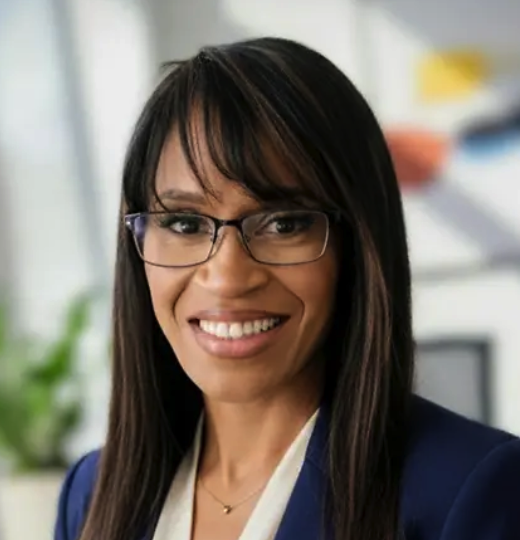

ROUND ROCK, TX, UNITED STATES, September 23, 2026 /EINPresswire.com/ — A Round Rock Educator and Community Advocate Uses Hands-On Learning, Mentorship, and Research to Support Students Facing Academic and Personal Challenges
Round Rock, Texas – For Tina Steiner, some of the most meaningful lessons in education begin with simply paying attention. A garden that had fallen into disrepair after COVID became the starting point for an outdoor learning initiative. A student whose behavior might otherwise be viewed as disruptive can become an opportunity to understand what is happening beneath the surface. And a child who struggles to sit still can eventually discover that the same energy can become a source of purpose.
These ideas have shaped Tina’s approach to education, community service, and student advocacy throughout her career. A fifth-generation native of Round Rock and a product of Round Rock schools, Tina has devoted herself to creating learning environments where students can feel understood while developing the skills, confidence, and resilience necessary to move forward.
For the past 21 years, Tina has served at a disciplinary alternative education placement (DAEP) campus, working as a science teacher, social skills instructor, and campus Teacher Master Gardener. There, she works with students experiencing significant academic, behavioral, and personal challenges. Her approach combines STEM education, hands-on experiences, social-emotional development, and a strong emphasis on human connection.
Tina describes herself as “the wiggly teacher for the wiggly kids,” a phrase that reflects both her personal history and her philosophy. As a child, she was the energetic student who could never sit still. Rather than allowing that experience to define her negatively, she learned to transform that energy into action and purpose. Today, she sees similar potential in many of the students she serves.
Her educational journey is supported by extensive academic preparation, including an Associate of Arts in General Studies in Liberal Arts from Austin Community College, a Bachelor of Science in Interdisciplinary Studies from Texas State University, and two master’s degrees from Grand Canyon University, one in Reading with an emphasis on Secondary Education and another in Curriculum and Instruction. She is also pursuing an EdD in Organizational Leadership: K-12 and has participated in the Texas A&M Leadership Cohort.
Tina’s professional development also includes TESOL certification, Social Behavioral Research for Students certification, Generalist 4-8 certification, Certified Special Education EC-12 credentials, and Interdisciplinary Studies Grades 4-8 certification. She is a Central Texas and National Teacher Consultant through the National Writing Project and remains active in a range of educational and community organizations.
Yet her work extends well beyond credentials. At the heart of Tina’s approach is a belief that students should be seen as whole people rather than reduced to their challenges.
Turning Personal Experience Into Purpose
Tina’s understanding of students who struggle with traditional educational environments is deeply personal. As a child, she remembers being the “little hyper girl” who could never sit still. What might once have been viewed simply as a problem became, over time, one of her greatest strengths.
That experience now informs the way she teaches.
Tina believes resilience, determination, and the ability to focus on possibility rather than negativity have been central to her success. When one path closed, she looked for another. A “no” was never necessarily the end of the road; instead, she viewed it as “not yet.”
That mindset has become an important part of the message she shares with students. She wants them to understand that their struggles do not define them and that the qualities that make them different can eventually become some of their greatest strengths.
Her philosophy is especially meaningful in an alternative education environment, where students may arrive carrying academic difficulties, behavioral concerns, personal challenges, or a combination of all three. Rather than seeing those circumstances as fixed identities, Tina focuses on what can happen when students are given the right environment, meaningful relationships, and opportunities to succeed.
Lessons From Educators Who Saw Beyond Behavior
Long before Tina became an educator herself, several teachers and school leaders demonstrated the kind of support she would eventually seek to provide for her own students.
Her fourth-grade teacher, Ms. Naylene Hester, played an important role in helping Tina understand that her energy did not have to be suppressed. Instead of treating her restlessness simply as a problem, Hester gave her meaningful things to do and showed her that energy could be guided.
Her middle school principal, Mr. Gene Stokes, offered another lesson that stayed with Tina. When she found herself in his office, he did not simply ask what she had done. Instead, he asked why she could not stay in class.
That distinction changed Tina’s perspective.
Rather than focusing exclusively on behavior, the question invited consideration of the person behind the behavior. It encouraged Tina to think about the reasons someone might be struggling and what could be done to address the underlying issue.
That lesson remains central to her work today.
Two Austin Community College professors, Dave Hill and David Ferris, also influenced Tina’s development. Today, she serves alongside them, creating a meaningful connection between the educators who helped shape her path and the work she continues to do.
For Tina, their influence illustrates the lasting impact educators can have. Sometimes the most important career advice is not a single statement. It is demonstrated through patience, curiosity, encouragement, and a willingness to understand another person.
Creating Learning Through The Garden
One of Tina’s most distinctive contributions to her campus began with something deceptively simple: a garden.
After seeing the condition of the campus garden following COVID, Tina recognized an opportunity. What began as an effort to restore the space gradually developed into a broader outdoor learning program.
After completing the Texas A&M AgriLife Extension Master Gardener certification, Tina helped develop and maintain multiple raised garden beds, fruit trees, and pollinator gardens. The project eventually expanded with the support of a nearly $24,000 Sprouts Healthy Communities Grant.
That funding helped support the development of a campus farmer’s market, outdoor classroom spaces, and student decompression areas.
The garden became more than an attractive outdoor space. It became a teaching environment where students could participate in activities that connected academic concepts with tangible experiences.
Through initiatives such as “Takeaway Fridays,” students participate in planting activities while developing responsibility, engagement, and pride in their work. The impact can extend beyond the classroom, with students continuing to share updates about their progress after leaving Tina’s immediate learning environment.
For Tina, experiential learning provides an important way to reach students who may not respond as easily to conventional classroom instruction. The opportunity to physically participate, observe growth, care for something over time, and see a direct connection between effort and results can make academic concepts more meaningful.
The garden also reflects Tina’s broader belief that education should create room for students to discover strengths they may not recognize in themselves.
Advocating For Earlier Intervention
Tina’s work with students has also led her toward research. She is currently a doctoral candidate in education and is preparing for Institutional Review Board submission as part of her dissertation research on student recidivism in DAEP settings.
Her research is informed by what she has observed in practice.
Tina has seen students thrive in DAEP environments where classrooms are smaller and educators have greater opportunities to understand the barriers individual students face. These experiences have contributed to her belief that alternative education models can play an important role in supporting students before challenges become more deeply entrenched.
One of the issues she hopes to highlight is the need for earlier intervention. Tina believes students should not necessarily have to wait until high school before receiving access to an alternative campus model designed around their specific needs.
Demand for these services continues to create pressure, including significant waitlists at the high school level. For Tina, that situation underscores the importance of examining how alternative education can evolve.
Her goal is not simply to respond after students have already experienced repeated difficulties. She wants to explore models that can intervene earlier and provide structured, compassionate support before students fall through the cracks.
Her research therefore connects directly to her classroom experience. It represents an effort to examine the challenges she sees firsthand and consider how educational systems might respond more effectively.
Encouraging The Next Generation Of Educators
Tina is equally passionate about supporting educators who are just beginning their careers.
Her advice to young women entering education starts with knowing their “why.” The profession can be demanding, and educators may encounter pressure, limited resources, public scrutiny, and emotional challenges. Tina encourages new teachers to remember the importance of the role they play in students’ lives.
She also emphasizes the value of finding a supportive professional community.
Young educators, in her view, should seek out veteran teachers, ask questions, and remain open to learning from people who have already traveled the path. As someone who has mentored younger educators on her own campus, Tina understands the importance of that exchange.
At the same time, she recognizes that mentorship is not one-directional. Experienced educators can learn from younger colleagues as well.
For Tina, collaboration, humility, and continuous learning are essential characteristics of effective educators. She encourages young women to surround themselves with people who strengthen their purpose and help them maintain their passion.
Her message is particularly relevant in a profession where educators can easily become overwhelmed by the demands placed upon them. Tina believes educators cannot pour from an empty cup and were never meant to carry the work alone.
Leading With Integrity, Empathy, And Purpose
Three values sit at the center of Tina’s professional and personal life: integrity, empathy, and purpose.
Integrity, for Tina, means consistency and follow-through. Students, families, and colleagues need to know that her actions match her words and that she will remain accountable even when doing the right thing is difficult.
Empathy shapes how she responds to the people around her. In an educational setting, that means looking beyond disruptive behavior or academic difficulty and considering the individual story behind what is visible.
This approach can help create opportunities for de-escalation, conflict resolution, and stronger relationships. For Tina, human connection should come before convenience or a narrow interpretation of policy.
Purpose provides the foundation that keeps those values connected. Her professional purpose is rooted in educational equity, mentorship, and creating environments where young people have meaningful opportunities to succeed.
That purpose also extends into her community involvement.
Tina is an active member of the Association of Texas Professional Educators, Round Rock UniverCity, the Round Rock Chamber of Commerce Leadership Round Rock program, and the Citizens Police Academy. She has participated in the 2023 Texas A&M AgriLife Certified Master Gardener Educator Cohort, the RRISD Instructional Materials Selection Committee, the RRISD/CTWP Open Institute Cohort, the RRISD ELA Leadership Cadre, the RRISD Literacy Network I & II, the RRISD NexGen Teacher Phase 3 program, the Texas State University CTWP Graduate Invitational Summer Institute, and the RRISD Strategic Planning Committee.
Her path also includes professional experiences outside education. Before entering the field, Tina held administrative and legal positions with the Texas State Board of Dental Examiners, Austin Community College’s Equal Opportunity and Affirmative Action division, and a private intellectual property law firm.
Those varied experiences have contributed to the perspective she now brings to education and community advocacy.
Continuing The Work With Students And Communities
Tina’s career reflects a consistent interest in understanding people, identifying possibilities, and creating practical ways to help others move forward.
Whether she is teaching science, guiding students through social skills instruction, tending a campus garden, mentoring another educator, participating in community organizations, or pursuing doctoral research, the underlying philosophy remains consistent: people need to be understood before they can be effectively supported.
Her own childhood experiences taught her that energy can become purpose. The educators who influenced her showed her that behavior can be examined through curiosity rather than judgment. Her work with students has reinforced the importance of alternative learning environments and earlier intervention.
Today, those lessons continue to shape Tina’s vision for education.
She hopes her research will contribute to a broader understanding of student recidivism in DAEP settings and help demonstrate the potential value of earlier, more proactive alternative education models. At the same time, she continues to create opportunities for students in the environment where she works, using experiential learning and personal connection to help them recognize possibilities beyond their current circumstances.
For Tina, meaningful educational work does not begin with asking what is wrong with a student. It begins with asking what that student needs, what strengths may be hidden beneath the surface, and what opportunities might help those strengths emerge.
That philosophy has become the foundation of her work—and a reflection of the educators who once chose to see possibility in her.
Learn More about Tina Steiner:
Through her Influential Women profile, https://influentialwomen.com/connect/tina-steiner
Influential Women
Influential Women provides a platform where women from all backgrounds can connect, share their perspectives, and create content that empowers themselves and others. Through storytelling, thought leadership, and creative expression, Influential Women amplifies voices that inspire change.
Editorial Team
Influential Women
email us here
Legal Disclaimer:
EIN Presswire provides this news content “as is” without warranty of any kind. We do not accept any responsibility or liability
for the accuracy, content, images, videos, licenses, completeness, legality, or reliability of the information contained in this
article. If you have any complaints or copyright issues related to this article, kindly contact the author above.

Media gallery