Austin Design Firm Reports Common Errors in Homeowner-Planned Closets
Swann Closet Design says accessibility errors rather than limited square footage account for most of the closet
Press Release Disclaimer: This is a press release distributed through the XPR Media network. It has not been independently verified by our newsroom.
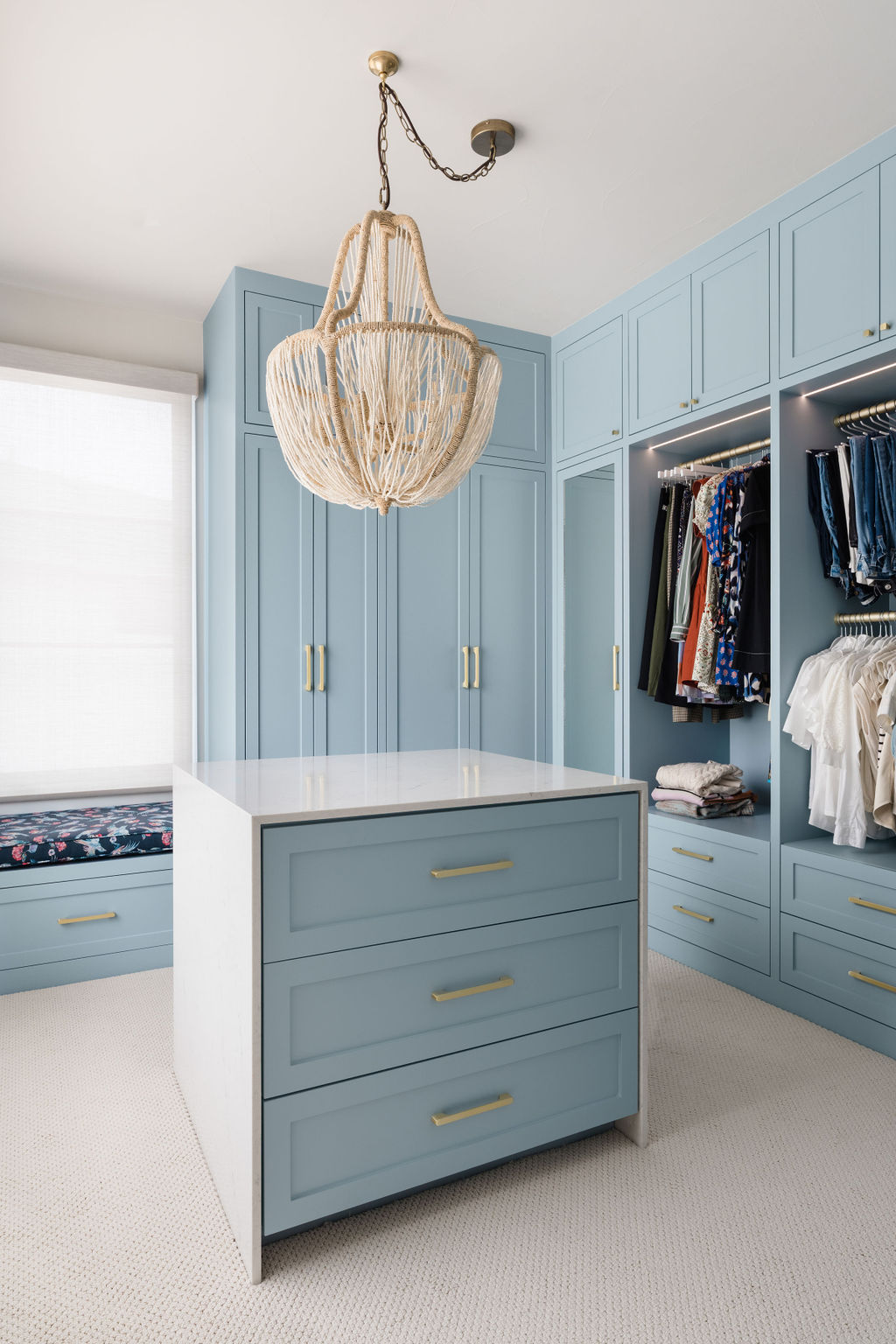

Swann Closet Design says accessibility errors rather than limited square footage account for most of the closet complaints it receives from Austin homeowners.
AUSTIN, TX, UNITED STATES, August 29, 2026 /EINPresswire.com/ — A closet can use every available inch of a room and still fail its owner every morning. Drawers set too high to see into. A hanging rod positioned where it looks balanced rather than where an arm comfortably lands. Shelving sized to fill a run instead of to hold what is going on it.
Swann Closet Design, which builds custom storage systems across the Austin metro, says these are the problems it is most often called in to correct, and that homeowners almost always misdiagnose them as a space problem.
“Most people don’t think about accessibility when designing a closet,” said Katie Nagji of Swann Closet Design. “They may build drawers too wide or too high. They may put hanging out of reach.”
Every Decision Is Defensible. The Result Is Not.
What makes accessibility errors difficult to catch is that none of them look like errors during planning.
A wide drawer is efficient use of a run. A high shelf takes advantage of vertical space. A rod centered on a wall is visually correct. Judged one at a time, each choice is reasonable, and a homeowner working from a sketch has no obvious reason to reject any of them.
The failure only appears in use, and it appears daily. Items stored above eye level stop being used. Drawers too wide to scan become places things disappear into. The closet is technically full and functionally frustrating, and the conclusion most owners reach is that the room is too small.
Shelf height is where the firm says the gap is widest between what looks right and what works, because it is one of the few dimensions that cannot be set by rule.
“Depending on what is being stored there, the height of the shelf should be designed accordingly,” Nagji said.
Standard Dimensions Are a Reference, Not a Layout
There are established measurements that work well for different categories of clothing, and Swann Closet Design says they are genuinely useful when planning closet systems. The mistake is treating them as the design itself.
“There are standard sizes that work for different types of clothing, but everyone should measure their own space and make sure they are designing to fit their own wardrobe,” Nagji said.
Skipping that step rarely produces a closet that fails outright. It produces one that quietly wastes volume. When dimensions are slightly off, the leftover space is too small to be assigned to anything, so it holds nothing. Repeated across an entire system, those margins add up to a meaningful share of the closet, space the owner paid for and cannot use.
The Constraints That Cannot Be Designed Away
A second category of problem comes from the room rather than the plan.
Doorways and their swing paths, window openings, HVAC access panels, sloped ceilings and awkward corners all restrict a layout in ways that are easy to miss on paper and impossible to ignore once installation starts. The firm says these are among the most common reasons a self-planned design has to be revised partway through.
Identifying them early usually changes the layout rather than merely trimming it, which is why the survey of existing conditions is treated as part of the design rather than a step before it.
Where to Start Instead
Asked what a homeowner should do before planning anything at all, Nagji’s answer moves the starting point away from the room entirely.
“It’s important to start by taking a clear inventory of everything you want to fit into your space and setting up your priorities,” Nagji said.
The step is simple and, according to the firm, almost never done. Most people have not sorted the full contents of a closet in years, and doing so tends to change the brief substantially. Categories turn out larger or smaller than assumed. Items unworn in seasons surface. The ratio of hanging to folded storage shifts once the real volume of each is visible.
Priorities matter as much as the inventory. A closet accommodating a large shoe collection, a professional wardrobe and seasonal gear cannot treat all three as equally important without compromising each.
Four Things to Settle Before Anyone Measures
1. Take a thorough inventory. Go through everything and sort by category rather than by season. The inventory is the brief, and it cannot be estimated from memory.
2. Rank what matters. Decide which categories get the prime real estate, and give it to what you reach for daily. Everything cannot be a priority.
3. Map the fixed features. Door swings, access panels, sloped ceilings, outlets. These constrain the design before a single dimension is chosen.
4. Test the reach. Stand in the space and mark where your hands naturally fall. Anything above or below that band is storage for things you use rarely, not daily.
The Part That Is Not About Storage
The firm says it asks clients one question that has nothing to do with capacity: whether there is something in the space they want to highlight or make a feature of.
The answer often shapes the design as much as the inventory does. A closet is one of the few rooms in a house built entirely for the person using it rather than for anyone else who will see it.
“It’s your own private space and you should feel good when you are in your closet,” Nagji said.
About Swann Closet Design
Swann Closet Design is an Austin based custom cabinetry company serving the greater Austin metro. The firm designs and installs custom closets, pantries, laundry rooms, home office built-ins and all other storage spaces for residential clients.
Katie Nagji
Swann Closet Design
email us here
Visit us on social media:
Instagram
Legal Disclaimer:
EIN Presswire provides this news content “as is” without warranty of any kind. We do not accept any responsibility or liability
for the accuracy, content, images, videos, licenses, completeness, legality, or reliability of the information contained in this
article. If you have any complaints or copyright issues related to this article, kindly contact the author above.

Media gallery